Beyond Looking: art through the senses
Newsletter: Beyond Looking
ISSUE 02 · OCTOBER 2026
Last month was all about looking. This month, I've been thinking about the senses in the classroom. If you missed the last newsletter, view it here.
In the art room, we spend so much time asking students to look carefully. Look at the line. Look at the colour. Look again. That matters. But we don't experience the world through our eyes alone. We hear it, touch it, taste it and smell it, often before we have noticed what we're looking at.
A smell can take you straight back to a kitchen, a classroom, or a place you haven't been for years. It arrives with a feeling long before it arrives with a word or an image.
So this month, I want to try a small experiment. What happens when we ask students to make art from their senses, rather than from sight? Ernesto Neto makes that question very easy to ask.
The artist I wish I'd discovered earlier: Ernesto Neto
Ernesto Neto is a Brazilian artist who makes huge, soft sculptures from stretchy, see-through fabric. They hang from the ceiling and sag towards the floor like heavy raindrops. Some are filled with spices: turmeric, cloves, cumin, pepper and paprika.
You often smell the work before you see it.
That's what I love about Neto. The spices are there for their colour, of course: warm yellows, deep reds, earthy browns. But they're also there for their scent. The work fills the room and asks you to walk around it, breathe it in and notice how it makes you feel. Neto once described how the smell of turmeric in his studio made him dizzy, so he added other spices to balance the air. Even the artist was changed by the work.
For students, Neto opens up a simple but powerful idea: art isn't only something you look at. It can be something you experience with your whole body. With younger students, this is a wonderful way into colour, form and material. With older students, it raises bigger questions about memory, place, culture and audience. What does a smell carry with it? Who does it belong to?
Ernesto Neto, Just like drops in time, nothing, 2002, Art Gallery of New South Wales
See Lipzoid Spice Garden at The Met →view and here Just like drops in time, nothing at the Art Gallery of New South Wales →view
Try this in the MYP art room:
Journal Spark – Mysterious Senses: The Smell Experiment
YAB STUDIO SPARK · Focus on aesthetics
Aesthetics is a key concept in the IB MYP Arts guide (p. 23).*
In the arts, the IB MYP Arts guide says, aesthetics isn't only about the rules of beauty. It also includes cultural perspectives and perception through the senses.
Why call it aesthetics? The word comes from the Greek aisthēsis, meaning perception through the senses.
Before you start, check for allergies, and use food and household scents rather than strong essential oils.
Prepare a few small boxes or jars, each with a hidden scent inside: coffee, orange peel, cinnamon, pine needles, soap, tea, mint, or something from the garden. Cover them with paper or fabric pierced with small holes, so students can smell but not see.
Students close their eyes, smell one box, and respond on a sketchbook page before they guess what it is. What colour is this smell? Is it a sharp line or a soft one? A spiky shape or a round one? Rough or smooth? Light or heavy? They choose the elements of art that best show how the smell makes them feel.
Then they guess the scent, open the box and compare their page with a partner's. Did the same smell look the same?
When I tried this with my own workshop participants recently, each mystery box held a different object or food, and they answered one question on a worksheet: What does the smell look like?
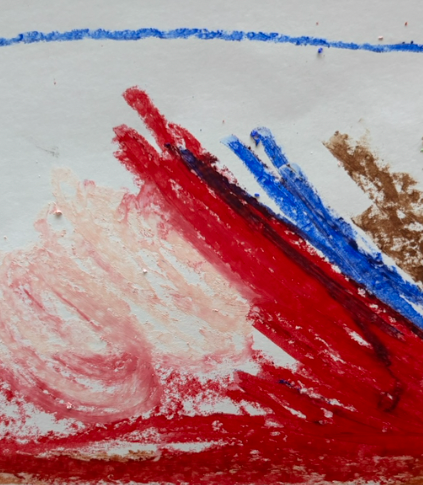
Some students will want to draw the thing itself, such as a coffee cup or an orange. Gently steer them back to colour, line and shape, but let them respond in their own way. The important part isn't getting the answer right. It's the noticing.
This is the first spark in the Mysterious Senses series, with sound, touch, taste and sight still to come. Open the student-facing page: Journal Spark – The Smell Experiment →
Take it further
Once students have turned a smell into colour and line, the follow-on spark asks where that smell takes them. In Smell and Memory, they choose one scent and build a memory map in their sketchbook of the people, places and feelings it brings back. Journal Spark – Smell and Memory (for paid members)
One question to take away
After the smell activity, ask your students: What did you notice before you saw it?
Then ask it of your whole art room: the sound as students walk in, the smell of paint and paper, the feel of the space. What do our students notice about the art room before they notice the artwork?
Art Studio notes: using what you already have
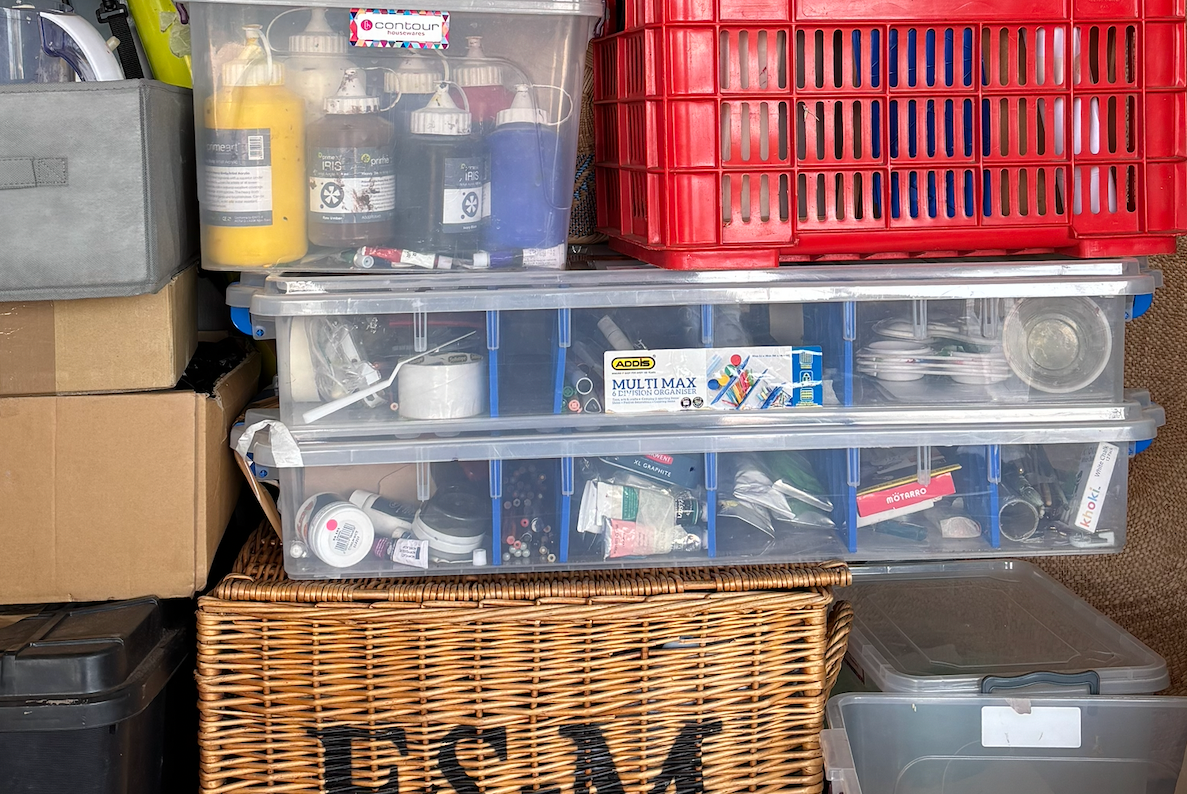
This month has been about trusting myself: jumping in before I know how something will turn out, and making freely, without self-doubt or one eye on the latest trend. When you're juggling different projects, it matters even more to simply do.
Let’s look at leftover materials, and the chaos they leave behind in the art room.
There's always a moment when you open the art cupboard and find the leftovers: half-used paint, broken crayons, odd scraps of paper, and a box of bottle lids you saved for a project that never happened.
It's tempting to see these as the end of something. But some of the most interesting work starts with limits. When you can't just buy something new, you start to see what's already there differently.
Studio prompt: give students a box of leftovers and one question: what can this become?
A few ideas to try:
- Coffee and tea as ink. Brew it strong and draw with a brush or a stick. It stains beautifully and smells wonderful, so it links back to this month's spark.
- Old paint palettes as printing plates. Press paper onto a dried palette and see what comes off.
- Bottle lids and cardboard edges as stamps. Repeat a mark to build pattern and rhythm.
- Paper scraps as a colour study. Sort them from warm to cool and light to dark, then collage a palette.
- Crayon and pencil stubs as new tools. Tape broken pieces together to make new drawing tools.
Sometimes the materials we nearly threw away have the most to say.
Approaches to Learning
ATL connections
These journal sparks give students practice in:
- Thinking (creative thinking): turning a smell into colour, line and shape
- Communication: using visual language to share an idea without words
- Social (collaboration): comparing pages and discussing different responses to the same smell
- Self-management (reflection): reflecting on choices and what they would change
Learner Profile Examples: inquirers (exploring a smell they can’t see), thinkers (translating one sense into another) and risk-takers(making abstract marks instead of drawing the object).
Coming next: Issue 03, on 3 November
Next week, paid membership opens.
Chapter 1: Art Thinking and The Journal. How artists think, and how the process journal captures it, with Journal Sparks, journal page structures and ways to get students recording their thinking, not just decorating pages.
Also opening 3 November:
- MYP 1 unit: Emotion, Colour and Movement (paid members). A unit planner, a provocation lesson, a student worksheet, and a simplified Task 1 with a student-friendly rubric.
- Current IB MYP example units (paid members). A first set of example units, with task sheets and rubrics using statements of inquiry, key and related concepts and global contexts, based on the IB MYP Arts Guide (2022). More units will be added through the year.
- The Enhanced IB MYP (paid members). A guide to what the IB has shared so far through the beta, plus example art units showing inquiry statements or questions, specified concepts and the new contextual lenses. I’ll update both when the final guide is published.
- ATL posters (paid members). Approaches to Learning posters for the art room, ready to print and put on the wall.
- More Journal Sparks. New ready-to-use sketchbook pages, starting with the next sparks in the Mysterious Senses series.
I spent years writing MYP Visual Arts curriculum resources before deciding to build something entirely my own. The library will keep growing all year, and I’d love you to join me. If you join for free now, Issue 03 will arrive in your inbox automatically, and you’ll be ready when paid membership opens.
→ Join The Yellow Art Book
→ Explore YAB Workshops for MYP teachers
→ Curriculum support for schools
If you try Mysterious Senses: The Smell Experiment, I’d love to see what your students make. Just reply to this email with the examples and I’ll be happy to post them with your permission.
See you in a week. Until then: keep looking, keep making, and keep noticing more than you see.
Emma
THE YELLOW ART BOOK · THEYELLOWARTBOOK.COM
Instagram: @theyellowartbook · Facebook: The Yellow Art Book
Interested in workshops?
IB curriculum workshops → Find out more
In-person artist workshops → @emmabutlerworkshops