Taking Charge of the Arts Process Journal
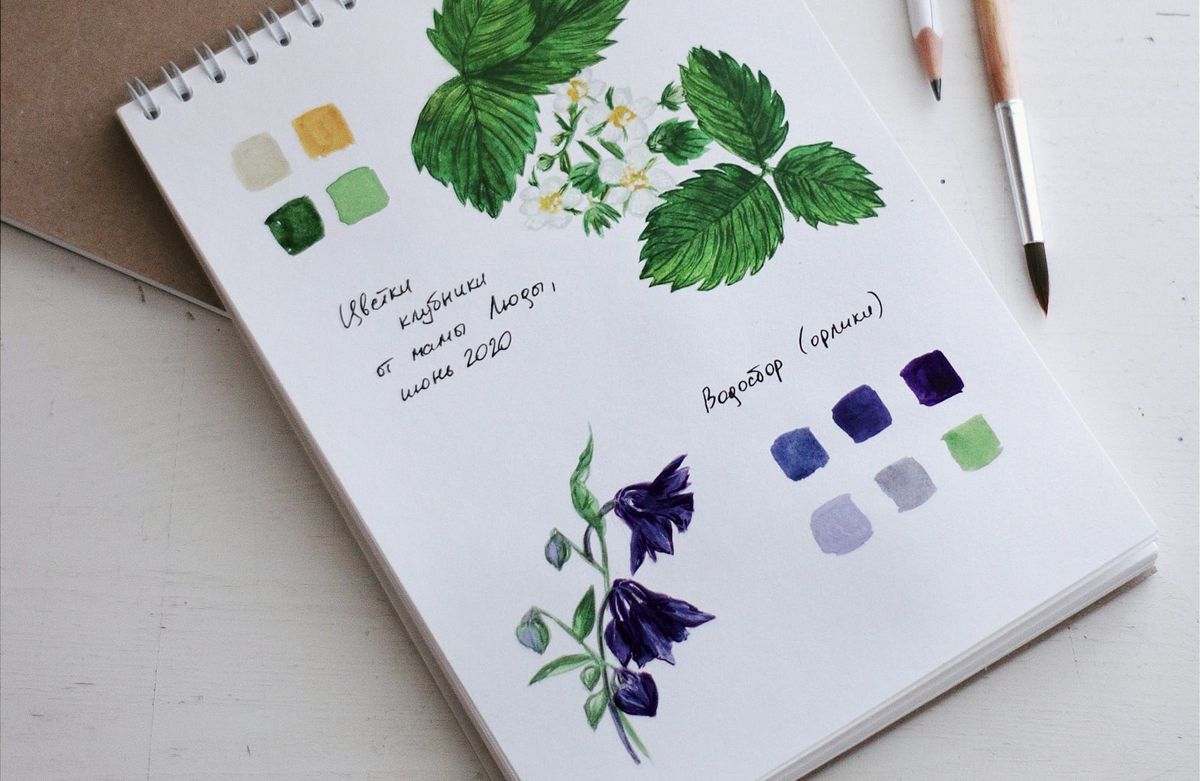
Organisation isn't about tidy pages.
ISSUE 03 · November 2026
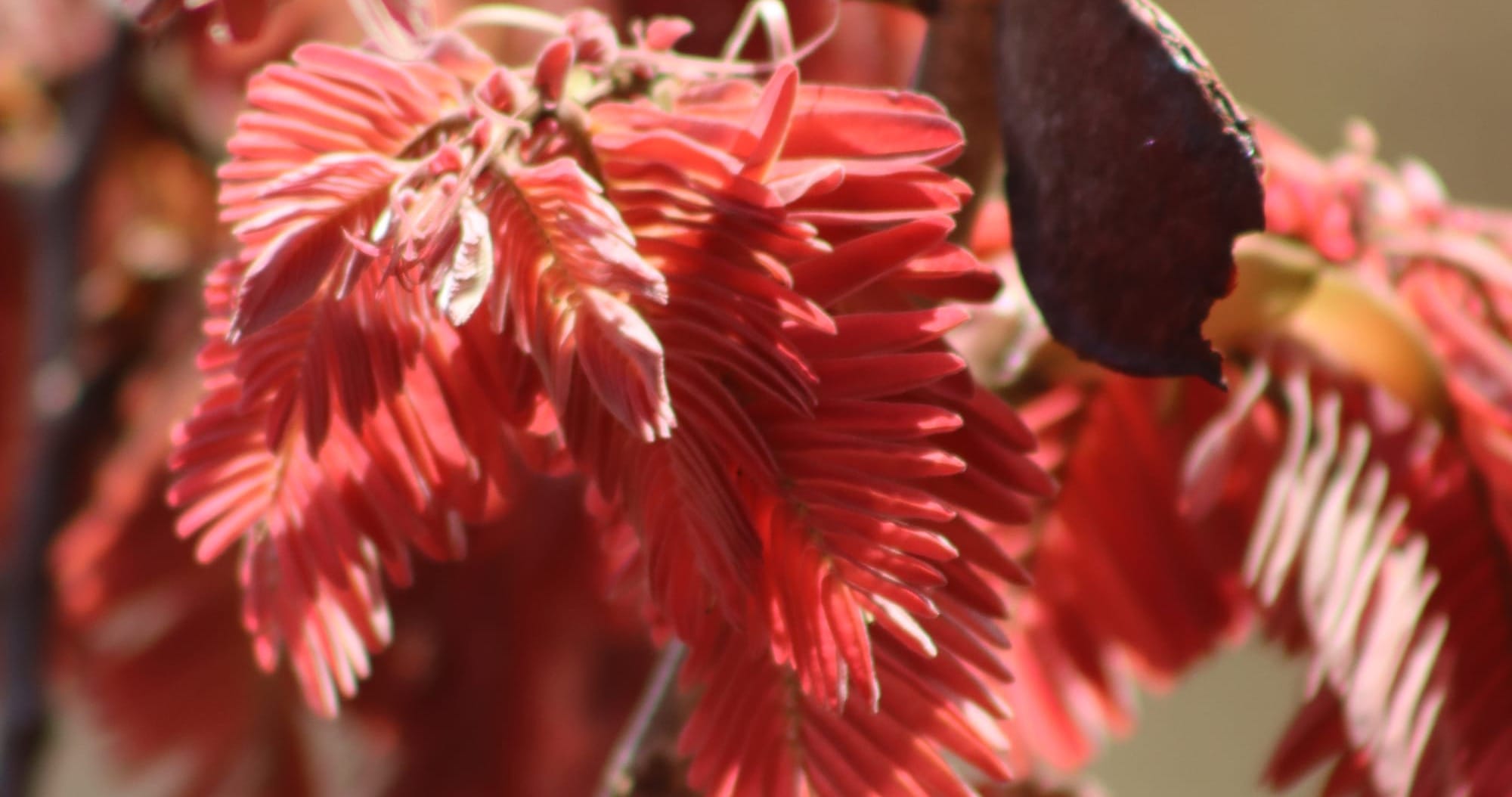
It’s been a very hot end to October here, and the forest on the outskirts of Harare has shown the full range of Southern Hemisphere spring colours. I’ve been stopping to photograph the changes and jotting the colours down in my own journal before they shift again. It’s a small reminder of what a journal is for: noticing, recording and coming back to it later.
NEW FOR PAID MEMBERS THIS MONTH
→ New in the Library: The Journal
The Library is now open, with two chapters. The Journal is all about the arts process journal: how to set one up, keep it going, and help students use it to run their own learning. It sits alongside Art Thinking, which covers the elements of art, the principles of design and the contemporary elements. New resources are added to both chapters throughout the month.
NEW FOR FREE MEMBERS
The Toolkit: start here
The Toolkit is for resources you can print and hand straight to your students. It’s the quickest way into The Yellow Art Book, and some of it is free when you join as a free member. Right now you’ll find student sheets for the arts process journal, a first taste of Art Thinking, Studio Sparks and past newsletters. In December it becomes the full Art Thinking Toolkit, with printable sheets on looking at art, the elements and principles, and words to describe, analyse and critique an artwork.
→ Explore the Toolkit
A few quick links:
- Free journal worksheets: two ready-to-print handouts to help students take charge of their arts process journal. → Download the free journal worksheets
- Contemporary Elements of Art flashcards → Explore Contemporary Elements of Art (free when you sign in)
The May 2027 IB MYP Arts PCUP (partially completed unit planner) is now out on the IB’s Programme Resource Centre (school login needed), so many of you will have MYP 5 eAssessment on your minds. I’m running two online workshops to help you plan the unit: Friday 4 December and Tuesday 9 February. You’ll find the details further down.
But a strong ePortfolio starts somewhere smaller: the journal, and the quiet skill that holds it together, organisation. So this month’s focus is the arts process journal and the approaches to learning (ATL) that help students use it well.
We all know the sketchbook (or, as the IB calls it, the arts process journal) that is brilliant in places and impossible to follow. The ideas are there, but the student can’t find them, and neither can their teacher. Organisation isn’t about tidy pages. It’s what lets students see where they are, what they’ve done and what comes next.
That’s when something shifts. When students hold the plan, they stop waiting to be told the next step and start taking charge of their own learning.
The new Journal chapter is open in the Library now, and I’ll keep adding ATL resources to it through November.
THE ARTISTS WHO DOCUMENTED EVERYTHING
Christo and Jeanne-Claude
Christo and Jeanne-Claude first proposed The Gates for New York's Central Park in 1979. It finally opened in February 2005, and stayed for just 16 days.
What happened in between is the part I want students to see. Years of research, site visits and meetings. Hundreds of drawings, collages, maps and scale models, changing as the plan changed. Then the action: thousands of saffron gates along the park's paths. And afterwards, the photographs, films and books that are now the only way to see it.
The process work wasn't a side product, either. They paid for the whole project by selling the preparatory drawings and collages.
Christo and Jeanne-Claude
The Gates, Central Park, New York City, 1979–2005
View a preparatory drawing → (Whitney Museum)
None of us needs convincing about journals. The hard part is consistency and continuity, not to mention habit building. Christo and Jeanne-Claude are a reminder that research, process, action and documentation are one cycle, and the journal is where students hold it together.
→ The Gates, 20 years on: drawings and photographs (Artnet)
→ From 1961 sketch to 2021: L'Arc de Triomphe, Wrapped (Artnet)
TRY THIS IN THE MYP ART ROOM
ATL: ORGANISATION WORKSHEET PROMPT
The Checkpoint Page
Give students the task, not the steps, and let them build the plan. They can repeat this at the start of every new activity.
- Share the task. Give students the task you have designed.
- Pair up. Ask students to work in pairs to read the task closely.
- Break it down. Together, they identify what the task is focused on and which MYP arts objective it links to. Then they list the steps they’ll need, for example research, experiments, developing ideas, final piece and reflection.
- Compare. Two pairs swap lists and add anything they missed.
- Set up the page. Wherever the new task begins in their journal, each student writes their list of steps, one per line. Beside each step they add a box to tick when it’s done, the due date, the date they completed it, and the journal page number where the evidence is.
- Make it a routine. Two minutes at the start of each lesson: tick what’s done, find the evidence, write the next step.
With MYP 1, keep the task short and model the first step together. With MYP 4–5, always add the assessment criteria and ask pairs to turn them into steps.
Not every task is assessed, and not every checkpoint page needs to be formal. For a quick experiment or an exploratory project, it can be playful and loosely focused. Shape it around what your students need.
→ Free student handouts for subscribers: Set up your journal for your new task(s) and What is the arts process journal?
Take it further: make the skill visible. The ATL posters (for paid members) put organisation and the other approaches to learning on your art room wall, so students can point to the skill they’re practising during the two-minute check-in.
FOR TEACHERS PREPARING FOR eASSESSMENT
MYP 5 eAssessment workshops: planning the May 2027 PCUP unit
The IB has released the partially completed unit planner (PCUP) for the May 2027 arts ePortfolio session. Teachers must use it to launch the ePortfolio unit, adapting it to their own school and students.
This is exactly where organisation pays off. An ePortfolio asks students to manage a long project, keep their evidence and reflect as they go, and a well-organised journal is how they do it.
I’m running this online workshop twice, so you can choose the date that suits you:
- Friday 4 December 2026, 14:00–17:15 CET (15:00–18:15 CAT)
- Tuesday 9 February 2027, 14:00–17:15 CET (15:00–18:15 CAT)
Together we’ll unpack this session’s PCUP, plan the unit for your own context, and set up journal systems so your students can take charge of their ePortfolio. We’ll break down the concepts, the statement of inquiry and the assessment expectations, so you and your students know exactly what a strong ePortfolio needs to demonstrate.
Each workshop runs as three 60-minute sessions on Zoom, with a maximum of 20 participants, and includes a Yellow Art Book Professional Learning Certificate. US$175.
 Emma Jane Butler
STUDIO NOTES
Art fairs from my desk
This month I've been wandering through art fairs online. The big fairs now publish their booths as online viewing rooms, so I can browse what galleries are showing around the world, from my own desk.
I've started using them the way I'd want students to use a journal: noticing what catches my eye, saving a few works and jotting down why. It's become a quick way to reflect on my own practice and to find fresh starting points for the art room.
→ Art Basel Online Viewing Rooms
THE YELLOW ART BOOK
I spent years writing MYP Visual Arts curriculum resources before deciding to build something entirely my own. The Yellow Art Book is that: artists, ideas and practical resources for MYP Art, covering Years 1–5.
If you try the journal checkpoint worksheet or other materials for The Yellow Art Book, I'd love to see how your students use them. Just reply to this email with a photo, and I'll share a few with your permission. Paid membership is now open, with full units, the Journal chapter and new resources every month.
→ Join The Yellow Art Book
→ Explore YAB Workshops for MYP teachers
→ Curriculum support for schools
Until next month,
Keep making. Keep track of the making.
Emma
THE YELLOW ART BOOK · THEYELLOWARTBOOK.COM
Instagram: @theyellowartbook · LinkedIn page coming in next issue.
Interested in workshops?
MYP Visual Arts workshops → Find out more
The Yellow Art Book is written for art teachers in IB schools. Are you an artist, home educator or adult maker who wants to get involved? Join my community workshops on Instagram at @emmajanebutlerworkshops.
The Yellow Art Book is independent. MYP is a programme of the International Baccalaureate, and these resources are not endorsed by the IB.